
The 7 Best Ecommerce Payment Gateways in 2025

If you’re considering creating an online store, selecting the right payment gateway is crucial for the success of your business.
As eCommerce continues to grow rapidly, more gateways, services, and payment methods are emerging, while users become increasingly comfortable adopting new technologies.
In this guide, I analyze the best ecommerce payment gateways to help you make the most informed decision for your project.
The 7 Best Ecommerce Payment Gateways
Below you will find a summary of the top 10 payment gateways for online stores.
- PayPal: One of the most widely used services for online payments.
- Stripe: Best in terms of fees and API customization.
- Shopify Payments: The best for Shopify stores.
- Monei: Best for integrating Bizum with Shopify.
- Square: The best for in-person sales.
- Amazon Pay: Best for Amazon users.
- Adyen: For international companies with high sales volume.
Choosing the right e-commerce payment gateway can be a daunting task. Each processor has its unique operation and advantages, specifically designed to meet the distinct needs of your business. Below, we provide an analysis of the best options.
1. PayPal
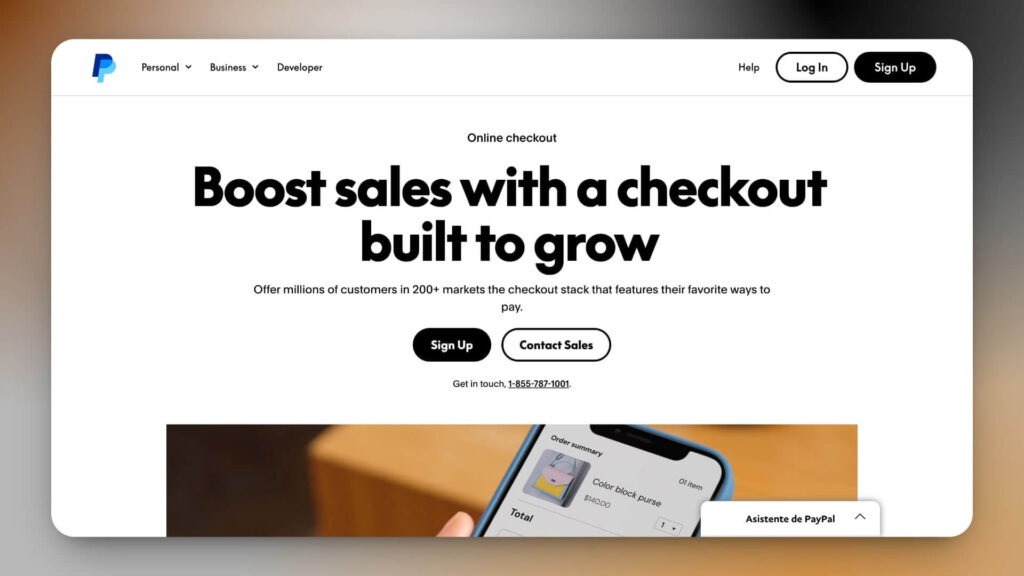
Along with payments by credit or debit card, PayPal is the most well-known and widely used payment gateway for e-commerce in the United States and worldwide.
All e-commerce platforms have PayPal integration and include the necessary functionalities for payment management, refunds, bank account and card connections, as well as an encrypted system that ensures secure transfers. You can connect your store and start selling.
PayPal is a good option if you´ve just created your online store from scratch, as PayPal may not be ideal for managing high-volume transactions.
PayPal features:
- Dedicated business accounts.
- Supports all Major credit and debit cards, as well as Pay Later options.
- Fraud protection on eligible transactions.
- Easy integration with top ecommerce platforms like Shopify or WooCommerce.
- Currency exchange.
- Immediate transfers.
Transaction Fees: Creating a PayPal Business account is free of charge. The only cost to consider is the sales commission, depending on the type of payment. For example, credit and debit card payments incur a fixed fee of 2.99% + $0.49 per transaction. Visit their official PayPal Checkout page for more details.
2. Stripe

Stripe is widely used as a payment processing platform in WordPress, PrestaShop, Magento, and other ecommerce CMS, serving millions of online businesses worldwide, regardless of their size or industry.
It makes it easy to use a variety of global payment options, no matter the language you speak or the device you’re using. Plus, with Stripe App Marketplace, you can connect tools that help you manage customers, quotes, shipments, inventory, and accounting, all in one place.
Stripe features:
- Highly competitive rates.
- Financial reporting.
- Fraud prevention system.
- Bill one-off or on a recurring basis.
- Prebuild payment form.
- Compatible with any bank and card.
- Solutions for platforms and marketplaces.
Transaction Fees: Stripe fees vary by region and payment method, with 1.5% for international cards and 2.9% + 30¢ per successful transaction for domestic cards. These fees are lower than those of other options.
3. Shopify Payments
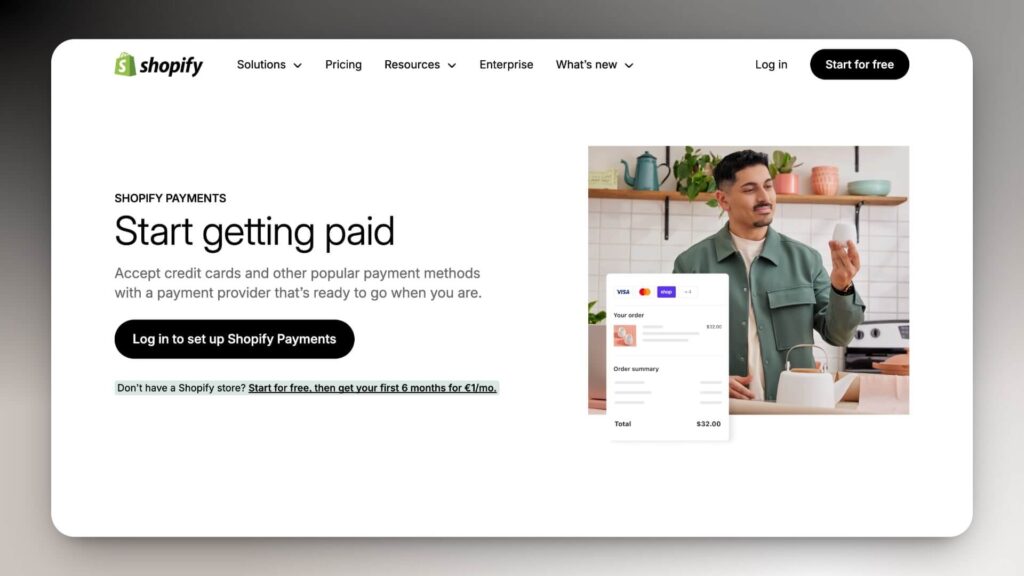
Although it is only designed for Shopify, its use is increasing because it offers native integration within your Shopify account dashboard.
Shopify Payments is based on Stripe Software (which provides back-end processing) and now integrates over 100 third-party payment gateways (such as PayPal or Klarna).
Shopify payments features:
- Native integration with Shopify, featuring its own in-store POS system for in-person selling.
- Allow your customers to pay with Shop Pay, PayPal Express, Google Pay, and Apple Pay.
- Manual payment methods such as cash, cash on delivery (COD), and bank transfers.
- Accepts several currencies depending on the country.
- Technical support 24/7.
Currently, Shopify Payments is only available in certain countries, including the United States.
Transaction Fees: Shopify Payments eliminates the third-party payment gateway fee. Starting at 30¢ per transaction plus a fee based on your plan, which ranges from 2.5% to 2.9% in the case of online transactions.
👉 In this guide, we tell you about Shopify’s up-to-date rates and pricing.
4. Monei

The Spanish fintech, Monei, manages and processes payments using the following methods: Bank Cards, PayPal, Bizum, Google Play, Apple Pay, and installment payments with Klarna.
Easily integrates with the best online store builders and offers integration with Shopify and other platforms to accept payments. It is an excellent alternative to Stripe and Shopify Payments, with one of the lowest rates and commissions per sale.
Monei features:
- One of the lowest rates and commissions per sale.
- Integrates with major eCommerce platforms.
- Payment for your online store subscription.
- Settlements of payments in 1 day.
- Personalized checkout.
Transaction Fees: Monei is designed for medium to large companies, and there is no initial fee. Based on your sales volume, Monei will calculate the fee that you are required to pay. The more payments you receive, the lower the commission. However, Monei’s lowest fees are even more affordable than those of other payment gateways.
5. Square
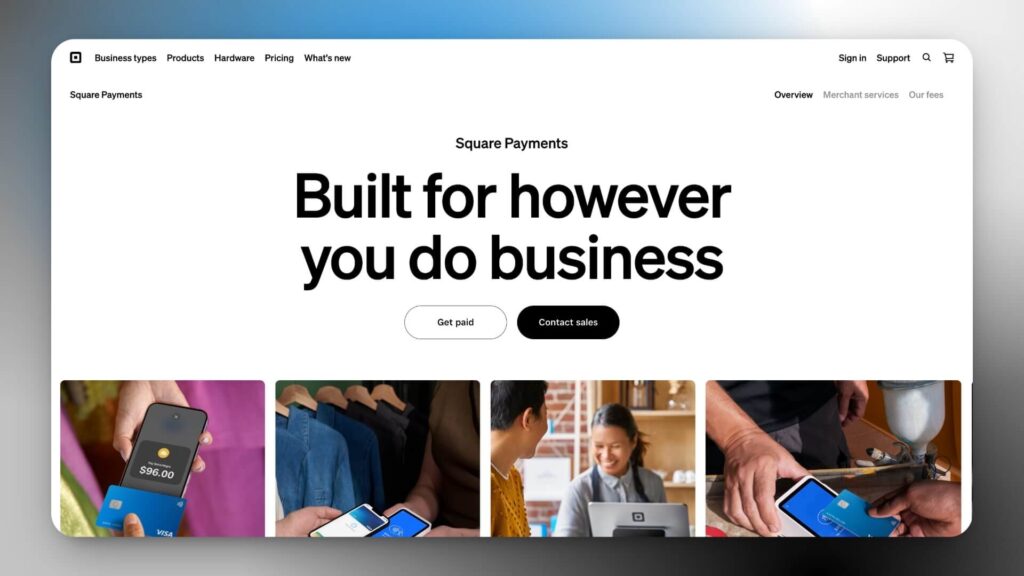
With Square, you can easily accept card payments in person, online, and remotely through various POS systems, readers, and even your mobile phone.
Creating and verifying a Square account takes just minutes, and with no hidden fees or long-term contracts, you can start processing payments immediately. With Square Checking, you get instant access to your funds or can transfer them to your external bank account.
Square key features
- Hardware Square POS is available for merchants.
- Accept online payments for reservations and appointments.
- End-to-end transaction encryption and fraud protection through Square Secure.
- Quick setup, no long-term commitments.
- Management of disputes and protection for buyers against fraud.
- You can create an online store with an automated product catalog.
Transaction Fees: Square offers transparent and straightforward pricing. With the free plan, you’ll pay a transaction fee of 2.9% + $0.30 for each online purchase or invoice payment. In-person payments have slightly lower processing fees at 2.6% + $0.10, and you can access even lower rates with their premium plans.
6. Amazon Pay
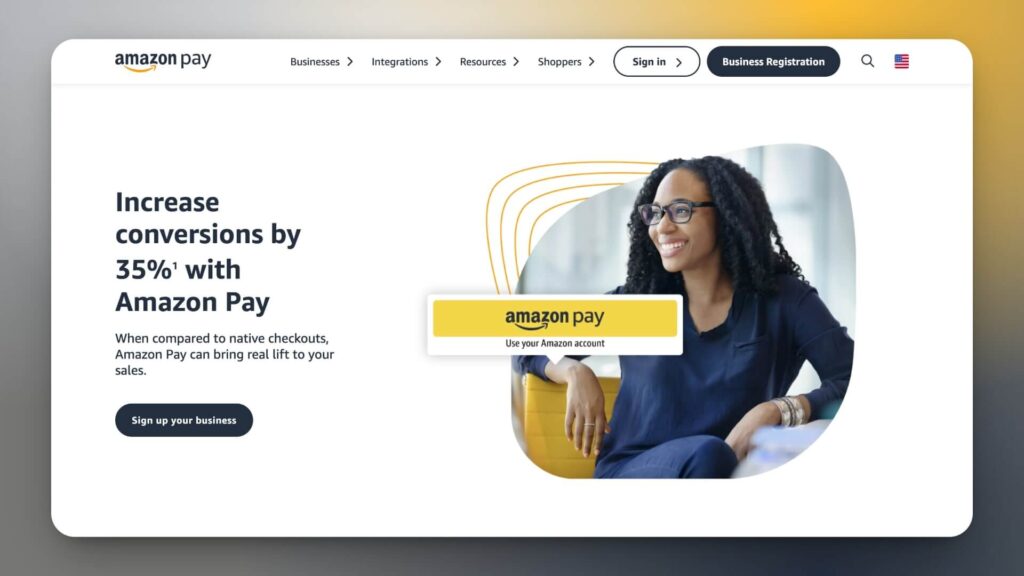
The giant Amazon also has its online payment service, Amazon Pay. It makes the purchasing process easier and faster, as it automatically adds the user’s shipping information and banking details with Amazon Sign-in.
Amazon Pay features:
- The process of purchase is quick (with the possibility of payment in installments).
- Same protection against fraud as offered by Amazon.es.
- Advantages for the users of Amazon.
- Improve the shopping experience with Amazon Pay Checkout v2.
Transaction Fees: The usual commission in the United States is between 2.9% and 3.5%, depending on the monthly payment volume, plus a fixed fee of $0.30 per transaction. Refer to the US-specific fee tables for Amazon Pay for detailed pricing information.
7. Adyen
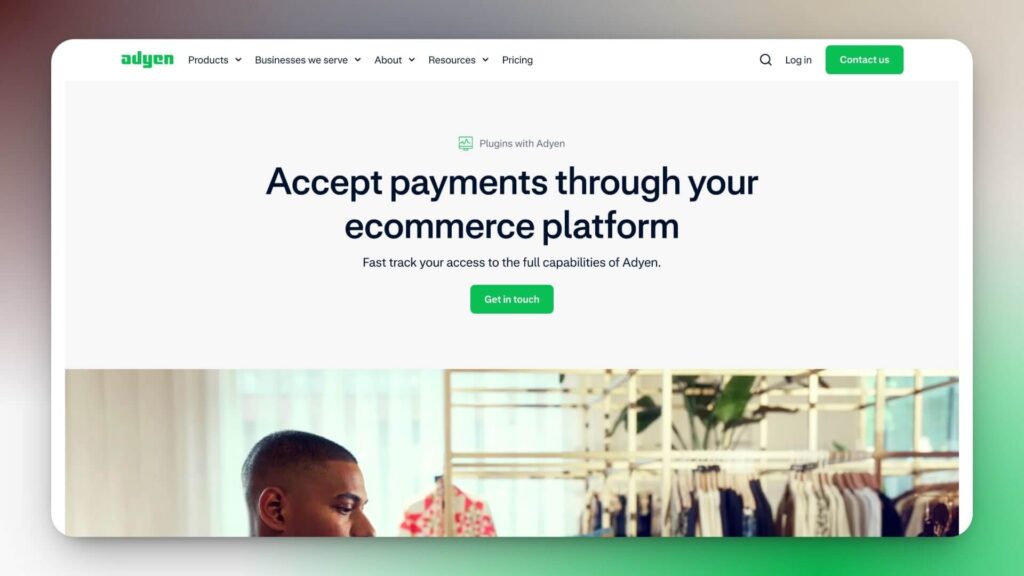
Adyen is a Dutch payment platform that aims to be an all-in-one experience for eCommerce, virtual POS, and mobile payments. It has a roster of high-profile tech and retail clients, including Uber, Shein, Pinterest, Adobe, and Microsoft.
Naming these companies, you might wonder if it’s software for small businesses. The answer is that you’ll need technical knowledge to fully leverage their enormous capabilities.
On the other hand, it requires a minimum number of transactions, making it most suitable for established companies in the market with a dedicated team to manage online purchases and payments.
Adyen features
- +250 different payment methods (credit cards, mobile wallets, Apple Pay, and PayPal).
- Ideal for online international stores (minimum monthly requirement).
- No fees are charged for registration or application.
- No monthly fee.
Transaction Fees: Processing rates vary depending on the country and payment method used, with an additional processing fee of $0.11 per transaction. You can check their pricing page for current rates and detailed information.
What is a payment gateway?
Payment gateways serve as a bridge between online stores and payment processors, transferring sensitive information, such as credit card data, necessary to facilitate online digital transactions.
In eCommerce, this is a crucial and mandatory point, as it enables 24/7 payments, ensures the security and protection of the buyer’s data, and streamlines resource management for online transactions.
A payment gateway should not be confused with a payment method, such as the increasingly popular wallets or virtual wallets (like Apple Pay or Google Pay), which facilitate payments between individuals or companies.
How do payment gateways work?
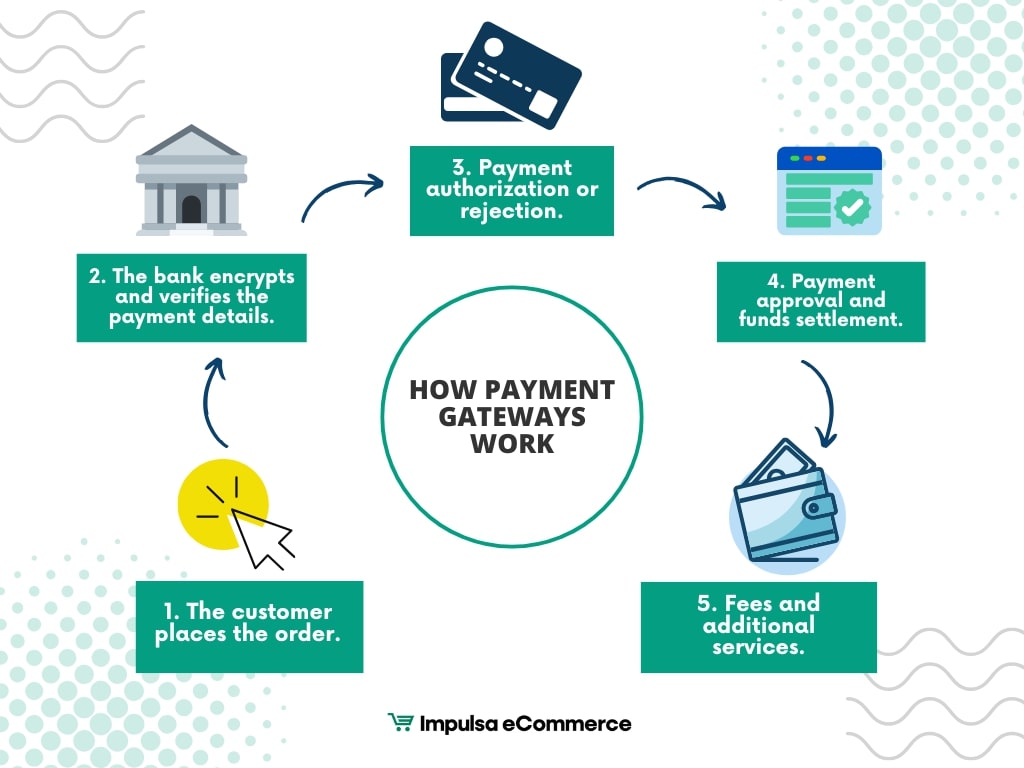
Many online payments begin when:
- The customer makes the purchase: The user enters their credit or debit card information into the shopping cart, usually through a form integrated into the website or mobile app. The encrypted payment data entered on the web is sent to the processor via the payment gateway.
- The bank verifies and validates the payment data: The payment gateway notifies the bank that issued the customer’s credit or debit card to ensure there are sufficient funds in the associated account, and the transaction is either authorized or declined.
- Authorization or rejection of the payment: The payment processor then communicates the authorization or rejection to the payment gateway, which in turn communicates that information to the e-commerce site. If authorized, the customer receives an order confirmation, typically in the form of an email receipt.
- Payment approval and fund settlement: The funds for the purchase are deducted from the customer’s bank or credit account and transferred to your e-commerce.
- Commissions and additional services: Payment gateways usually charge a fee for their services, which can be a percentage of the transaction amount or a fixed fee per transaction. Additionally, payment gateways may offer extra services such as fraud detection, refund management, and the creation of reports and analyses.
How to choose the best payment gateway for your online store?
There are several factors that any e-commerce business owner should consider before selecting a payment gateway: the level of security provided by the provider, the provider’s ability to process multiple payment methods, the location of your customers, and the associated costs and fees.
Security
For a secure payment process, your website will need an SSL certificate. This SSL certificate provides an additional ‘security layer’ by encrypting the visitor’s connection to your website.
Some cloud-hosted e-commerce platforms (SaaS), such as Shopify or Square, include SSL certificates and web hosting. Other platforms, such as WooCommerce and PrestaShop, as well as other open-source software, will require hosting and the configuration of an SSL certificate.
On the other hand, the payment provider must comply with PCI (Payment Card Industry) standards. PCI stands for ‘Payment Card Industry,’ a set of rules that merchants must follow to accept online payments. Credit card companies require compliance to ensure the security of credit card transactions processed through their processor and to protect buyers.
Accommodate various methods of payment online.
The payment gateway must be able to process a variety of payment methods, not only credit and debit cards, but also PayPal and other options, such as Apple Pay or Google Pay, to enhance the user experience on the website.
Accept international payments.
If your business only sells in Spain or another Spanish-speaking country, it is not necessary to select a payment platform that allows international transactions. However, if you plan to have customers abroad, it is advisable to choose a service that facilitates international payments.
The payment gateway must be able to support credit and debit cards from various foreign banks and allow users to convert payments to their country’s currency. The gateway should also offer support for navigating different tax systems.
Costs and fees.
The costs associated with the use of payment gateways can be divided into three main components:
- Opening costs: Some payment gateways may charge a commission for opening an account.
- Monthly subscription fee: They usually range between $10 and $50 and will depend on
- Transaction fee: Processors usually charge between 1% and 5% of each transaction, in addition to a fixed cost that typically does not exceed 25 cents.
Frequently Asked Questions
What are the best payment gateways?
There are many different payment gateways, but the best ones are PayPal, Stripe, Shopify Payments, Adyen, Square, Monei, or Amazon Pay.
Which payment gateway should you choose?
When choosing the best payment gateway for your online store, consider the country you’re in, the most popular purchasing method among users, and the eCommerce platform you’ll use to install the payment gateway.
How does a payment gateway work?
A payment gateway allows your customers to pay for the products they purchase in your online store or business. These payment methods enable you to receive payments from your customers conveniently and securely.
Which is the best gateway for online stores?
It will depend on the platform you use; at a minimum, you need to have solutions like PayPal and Stripe. Once you have a flow of traffic, you can add other options, such as installment payments, to enhance the shopping experience.
What are the best solutions for payment in installments?
The best payment gateways for installment payments in e-commerce for US-based businesses are Klarna, Afterpay, and Affirm.
Conclusion
Here is our guide to the best ecommerce payment gateways.
Choosing the best payment gateway is one of the most crucial decisions a business owner can make, so it’s essential to consider the needs of your business and customers, as well as your financial circumstances.
Are there any payment gateways not listed here? Tell us about them!
Notice: Impulsa eCommerce is supported by readers. If you purchase through a link on our site, we may earn a commission at no cost to you. See more.
